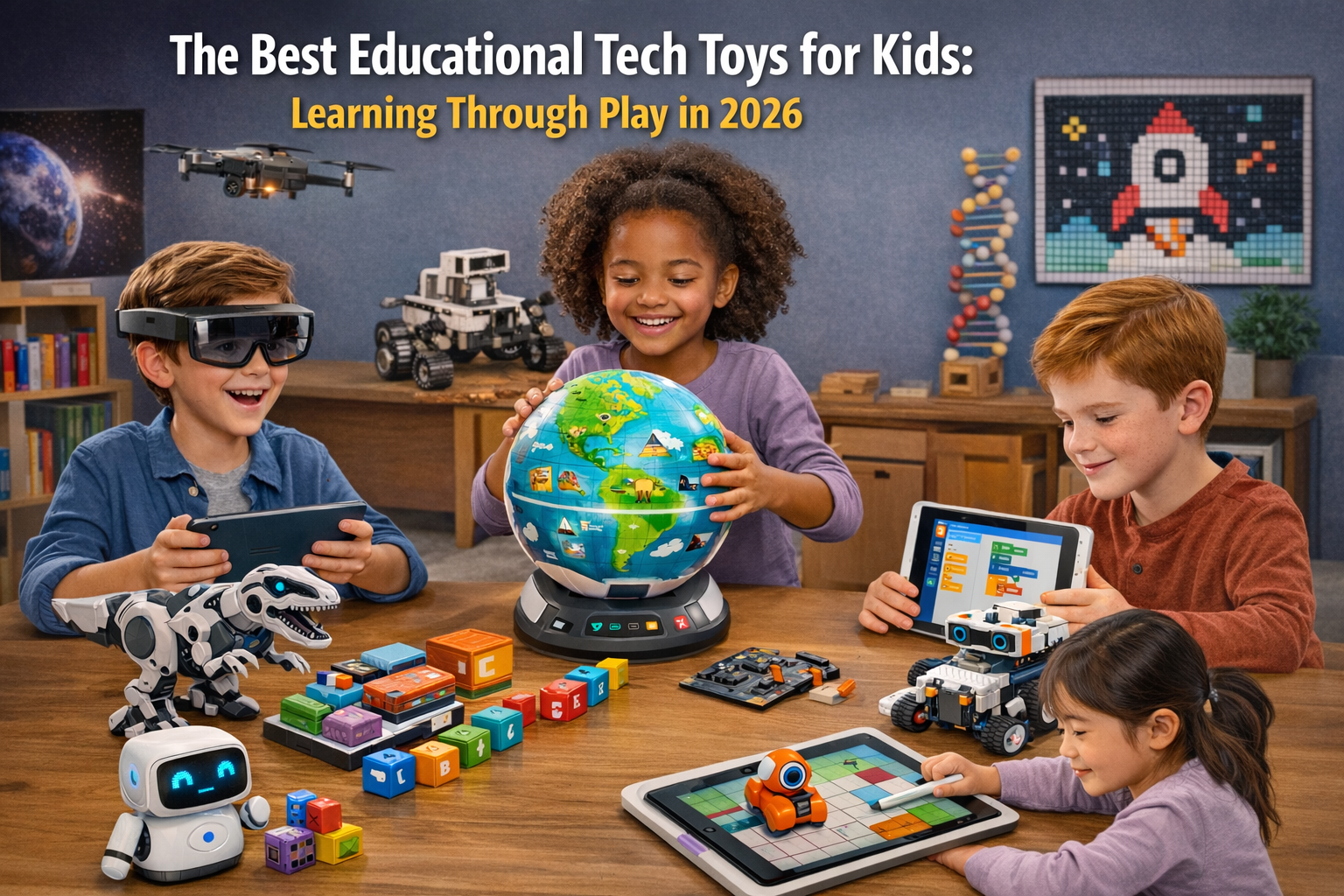
In an increasingly digital world, educational technology toys offer children ways to develop critical skills while having fun. The best educational tech toys combine entertainment with learning, fostering creativity, problem-solving abilities, and technological literacy. This comprehensive guide explores the top educational tech toys for kids in 2026, helping parents make informed decisions support their children’s development.
Why Educational Tech Toys Matter
Educational technology toys go support their children’s development.
Why Educational Tech Toys Matter
Educational technology toys go beyond traditional playthings by incorporating interactive elements that teach coding, robotics, science, mathematics, and creative thinking. These toys prepare children for a technology-driven future while developing essential skills like:
- Computational thinking: Breaking down problems into manageable steps
- Creativity: Expressing ideas through technology
- Persistence: Learning from failures and trying again
- Collaboration: Working with others to achieve goals literacy**: Understanding how technology works
Age-Appropriate Educational Tech Toys
For Preschoolers (Ages 3-5)
1. Interactive Learning Tablets
Kid-friendly tablets designed specificallyners offer age-appropriate games, stories, and activities that teach letters, numbers, shapes. Look for devices with:
- Durable, child-proof construction
- Parental controls and content filtering
- Educational apps aligned with early learning standards
- Screen time management features
These tablets introduce children to technology in a controlled, educational environment while developing fine motor skills and hand-eye coordination.
2. Programmable Robot Toys
Simple programmable robots designed for preschoolers useful buttons or cards to teach basic coding concepts without screens. Children learn sequ screens. Children learn sequencing, cause-and-effect relationships, and problem-solving by programming the robot to move, light up, or make sounds.
3. Interactive Storytelling Devices
Screen-free devices that tell interactive stories, play educational games, and respond to children’s choices help develop language skills, listening comprehension, and imagination. These toys often include physical components like cards or figurines that trigger different story elements.
For Elementary Students (Ages 6-10)
1. Coding Robots and Kits
More advanced programmable robots introduce children to real coding languages through visual programming interfaces. These robots can:
- Navigate mazes and complete challenges
- Respond to sensors and environmental inputs
- Be programmed through drag-and-drop interfaces
- Grow with the child’s skill level
Popular options include robots that teach Python, JavaScript, or block-based coding, providing a foundation for future programming skills.
2. Electronics and Circuit Kits
Hands-on electronics kits teach children about circuits, electricity, and engineering principles. Modern kits use snap-together components that eliminate the need for soldering, making them safe and accessible for young learners. Children can build working devices like radios, alarms, and games while learning how electronics work.
3. 3D Printing Pens and Design Tools
3D printing pens allow children to create three-dimensional objects by hand, combining artistic expression with spatial reasoning and engineering concepts. These tools help develop:
- Fine motor skills and hand-eye coordination
- Spatial awareness and geometry understanding
- Creative problem-solving
- Patience and attention to detail
4. Augmented Reality Learning Systems
AR-enabled toys and apps overlay digital information onto the physical world, creating immersive learning experiences. Children can explore anatomy, astronomy, geography, and history through interactive 3D models that respond to their movements and questions.
For Middle Schoolers (Ages 11-14)
1. Advanced Robotics Kits
Sophisticated robotics kits introduce teenagers to mechanical engineering, programming, and problem-solving. These kits often include:
- Multiple sensorstouch, light, sound, distance)
- Programmable motors and servos
- Compatibility with professional programming languages
- Online communities for sharing projects
Students can build and program complex robots that compete in challenges, fostering teamwork and competitive Programming Kits**
Educational drones that can be programmed to perform autonomous flights teach aerodynamics, physics, and advanced coding. Students learn to:
- Program patterns and maneuvers
- Use sensors for obstacle avoidance
- Capture and analyze aerial data
- Understand real-world applications of drone technology
3. Virtual Reality Learning Experiences
VR headsets designed for education transport students to historical events, distant planets, or microscopic worlds. These immersive experiences make abstract concepts tangible and memorable, particularly effective for:
- Science (exploring the human body, ecosystems, space)
- History (experiencing historical events firsthand)
- Geography (visiting distant locations)
- Art (creating in 3D space)
4. Maker Kits and STEM Projects
Comprehensive maker kits combine electronics, coding, and engineering to create functional projects like smart home devices, weather stations, or musical instruments. These open-ended kits encourage experimentation and creative problem-solving.
Key Features to Look For
Educational Value
- Aligns with learning objectives and curriculum standards
- Teaches transferable skills applicable beyond the toy
- Offers progressive difficulty levels
- Includes educational resources and lesson plans
Engagement and Fun
- Captures and maintains children’s interest
- Provides immediate feedback and rewards
- Offers and replayability
- Balances challenge with achievability
Quality and Safety
- Durable construction that withstands active play
- Non-toxic materials and safe electronics
- Age-appropriate complexity
- Positive reviews from parents and educators
Parental Involvement
- Opportunities for parent-child interaction
- Clear instructions and support resources
- Parental controls and monitoring features
- Community forums and support
Benefits of Educational Tech Toys
1. Personalized Learning Tech toys adapt. Personalized Learning** Tech toys adapt to individual learning paces, providing appropriate challenges and support for each child’s skill level.
2. Immediate Feedback Interactive toys provide instant feedback, helping children understand concepts and correct mistakes in real-time.
3. Engagement and Motivation Gamification points, levels, and achievements motivate children to persist through challenges and celebrate accomplishments.
4. Future-Ready Skills Early exposure to technology, coding, and engineering prepares children for careers in STEM digital literacy essential for any career path.
5. Creativity and Innovation Open-ended tech toys encourage experimentation, creative expression, and innovative thinking.
Balancing Screen Time and Physical Play
While educational tech toys offer tremendous benefits, balance is essential. Experts recommend:
- Setting clear time limits for screen-based activities
- Encouraging outdoor play and physical activity
- Choosing toys that require hands-on manipulation
- Participating in tech activities together as a family
- Selecting screen-free educational tech options when possible
Making the Most of Educational Tech Toys
1. Play Together: Engage with your child, ask questions, and explore together 2. Connect to Real World: Relate toy activities to real-world applications and careers 3. Encourage Experimentation: Support trial-and-error learning and celebrate failures as learning opportunities 4. Join Communities: Connect with other families and educators using the same toys 5. Extend Learning: Use toys as springboards for deeper exploration of topics
Budget-Friendly Options
Educational tech toys range from $20 to $300+. Budget-conscious parents can:
- Start with affordable coding games and apps
- Look for open-source platforms with free resources
- Purchase refurbished devices from reputable sellers
- Share expensive items with other families
- Utilize library lending programs for tech toys
Conclusion
Educational tech toys represent powerful tools for preparing children for a technology-driven future while making learning engaging and fun. By carefully selecting age-appropriate toys that align with your child’s interests and learning goals, you can foster curiosity, creativity, and critical thinking skills that will serve them throughout their lives. Remember, the best educational toy is one that your child actually wants to play with—when learning feels like play, children develop a lifelong love of discovery and innovation. Invest in quality educational tech toys, participate in your child’s learning journey, and watch as they develop skills and confidence that will shape their future success.